
New WPP Media/System1 Study Reveals Best Practices For Podcast Host And AM/FM Radio Talent Ad Reads
Click here to view a 17-minute video of the key findings.
Click here to download a PDF of the slides.
The Creator Effectiveness Playbook: How to Build Your Brand with Creators is a major new study from WPP Media, the creative testing firm System1, and TikTok. It offers outstanding insights and best practices for audio talent endorsements and host reads. The global study found that entertainment earns emotion and early branding gives the brand credit.
Key findings:
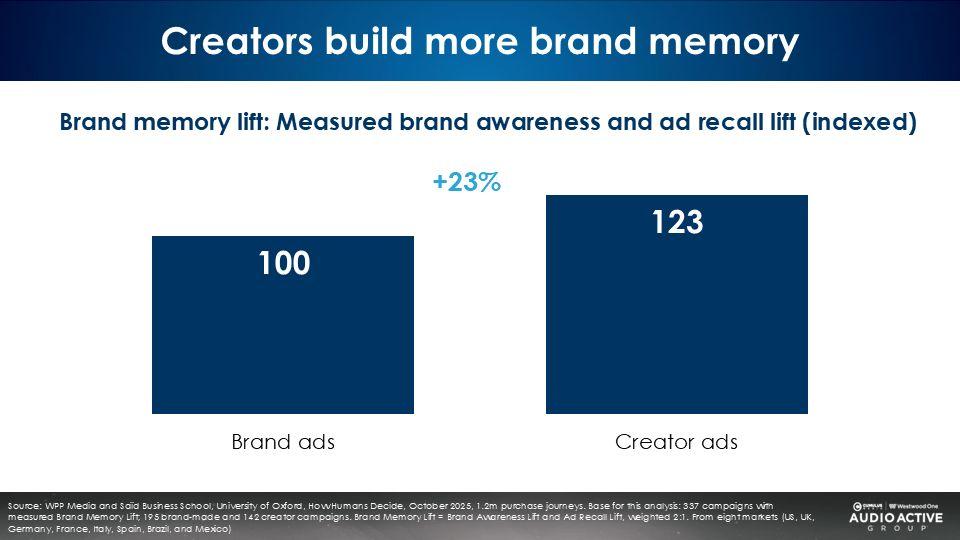
- Host-read ads generate greater impact: System1 and WPP Media find creator ads (a.k.a. “host reads”) drive greater brand memory lift, which is the combination of brand awareness and ad recall.
- Two best practices: Say the name of the advertiser within the first two seconds and ensure strong positive emotion via entertainment.
- “Say it and show it”: Saying the brand and showing it in the first two seconds of the ad drives the strongest brand recognition.
- Conduct a “brand early and often” creative audit: Watch/listen to all your ads. Check off if your brand is mentioned in the first two seconds and if there are at least five or more audio track brand mentions in 30-second ads.
- Use both salesmanship and showmanship: Emotion-based creative that is funny and entertaining builds stronger brands and generates greater business outcomes.
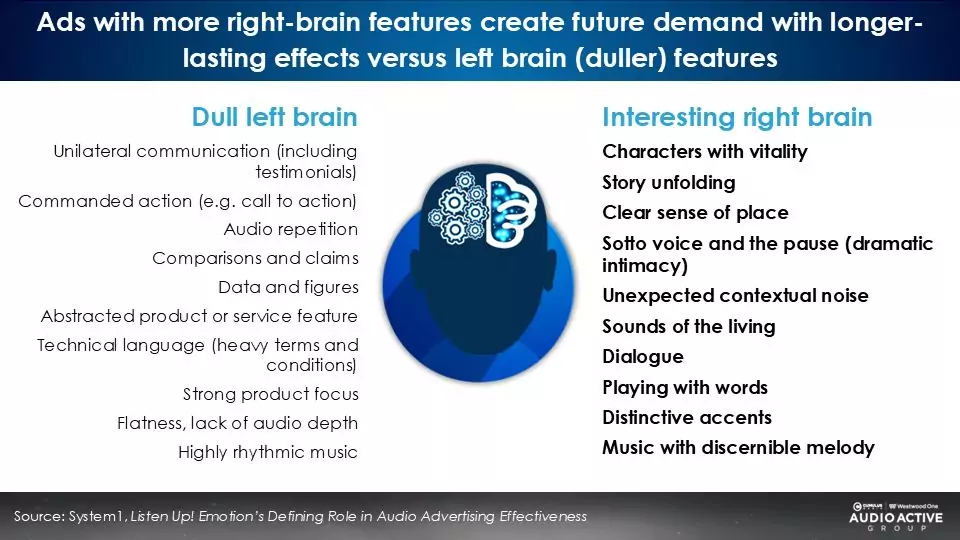
- Utilize right brain elements such as characters with vitality, story unfolding, clear sense of place, sounds of the living, dialogue, word play, distinctive accents, and music with discernable melody.
How study was conducted
The WPP Media and System1 study measured creative responses for 1,217 paid ads among 182,500 TikTok users and connected that to in-market brand lift data. The study covered 8 global markets and $71M of media spend, which generated 23.6 billion impressions.
The “Super Media Touchpoints” matrix reveals short-term sales effect and long-term brand building performance
A major study from Effie released at the prestigious Cannes Advertising Festival named AM/FM radio and podcasts as deserving of the “Super Touchpoints” effectiveness honor.
Effie runs one of the few advertising competitions that focuses on business results generated by advertising. The Effie Awards are based on growth factors such as incremental revenue, profit, market share, new customers, loyalty, and price sensitivity.
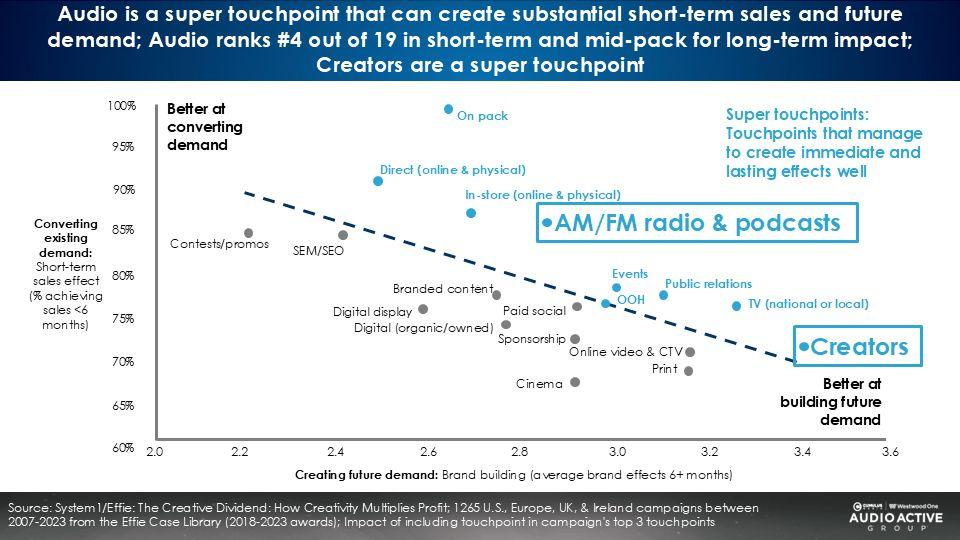
Of nineteen media examined, the Effie study revealed AM/FM radio and podcasts ranked fourth in achieving short-term sales effect within six months. Podcasts and AM/FM radio also performed strongly in long-term brand building with impressive brand effects beyond six months.
On the vertical axis, Effie assesses the performance effects of nineteen media studied. Performance effect is defined as the % of brands that saw sales effect in less than six months.
The horizontal axis scores media on their ability to build brands via the average number of lasting brand effects. These measures include brand awareness, brand image, brand equity, consideration/intent, trust, fame, differentiation, and distinctiveness.
Here is the layout of the Effie “Super Media Touchpoints” matrix:
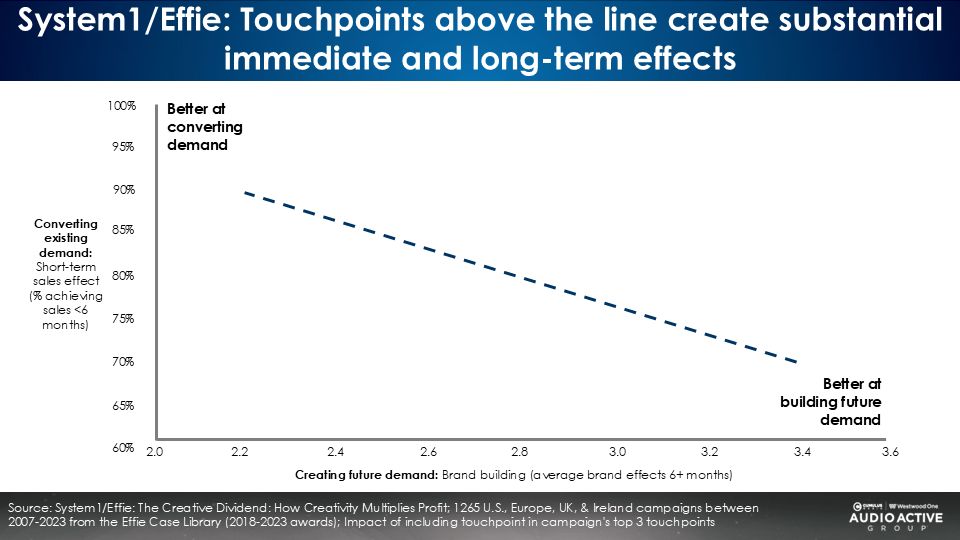
Media that score above the dotted line are deemed “Super Touchpoints,” which create immediate sales and lasting brand effects.
As “Super Touchpoint” media, AM/FM radio and podcasts can both convert existing demand with impressive short-term sales impact and create future demand with strong brand building
Now, let’s drop in the nineteen media and consumer touchpoints into the matrix. Podcasts and AM/FM radio rank fourth of nineteen media for short-term sales effect and perform strongly for long-term brand effects.
Creator/host-read ads generate greater impact
System1 and WPP Media find creator ads, a.k.a. “host reads,” drive greater brand memory lift, which is the combination of brand awareness and ad recall.
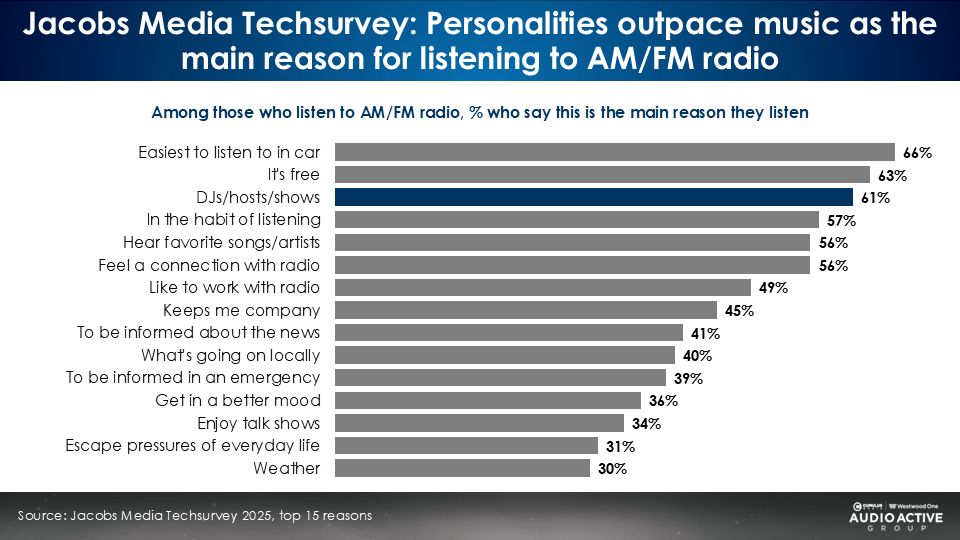
AM/FM radio hosts are the primary reason people listen; Talent reads drive exceptional sales effect
Jacobs Media long running Techsurvey reveals after “easiest to listen to in car” and being “free,” DJs and hosts are indicated as the main reason to listen to AM/FM radio.
A MARU/Matchbox study found AM/FM radio listeners form long-term relationships with AM/FM radio hosts due to their ability to make them laugh, think, and feel connected to their communities.
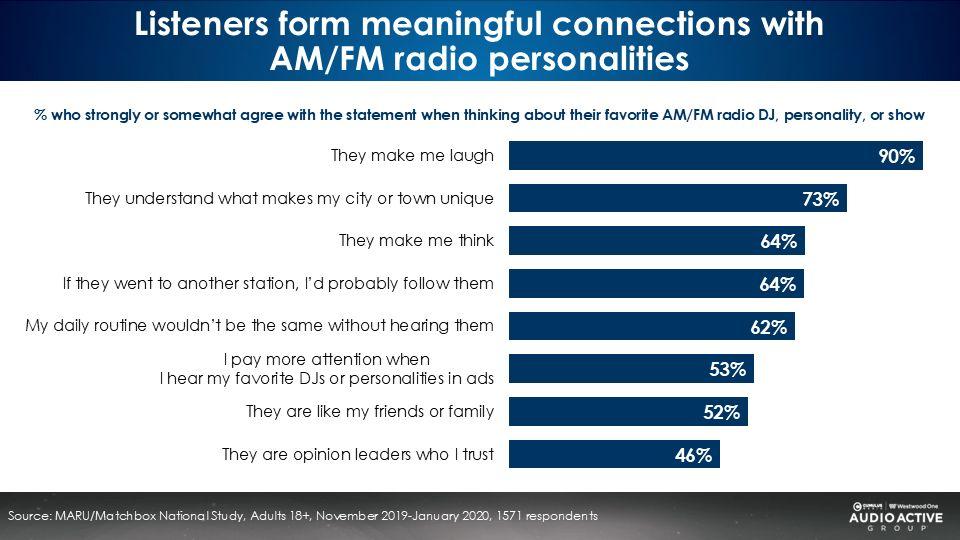
These warm feelings for AM/FM radio personalities translate into powerful sales effect for host reads and talent endorsements.
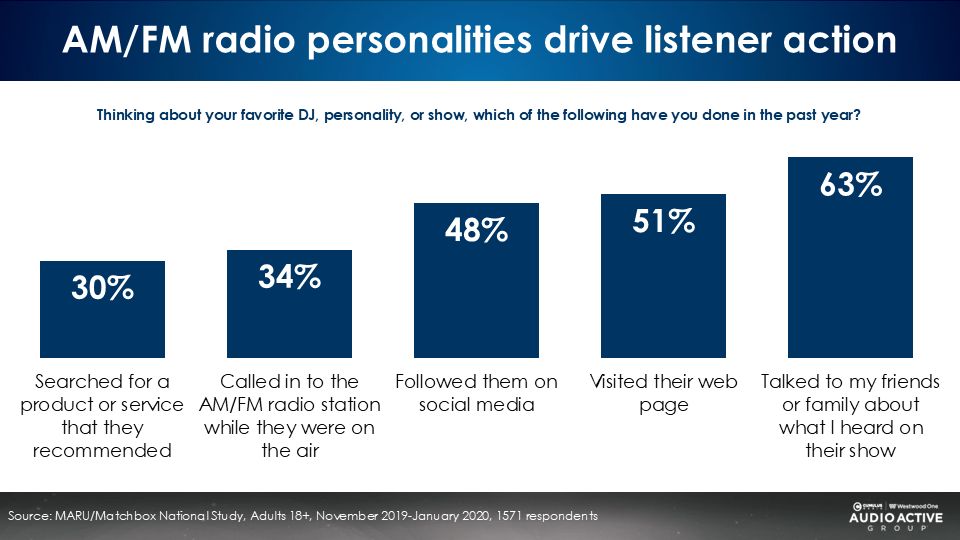
Two best practices: Brand within the first two seconds and ensure strong positive emotion
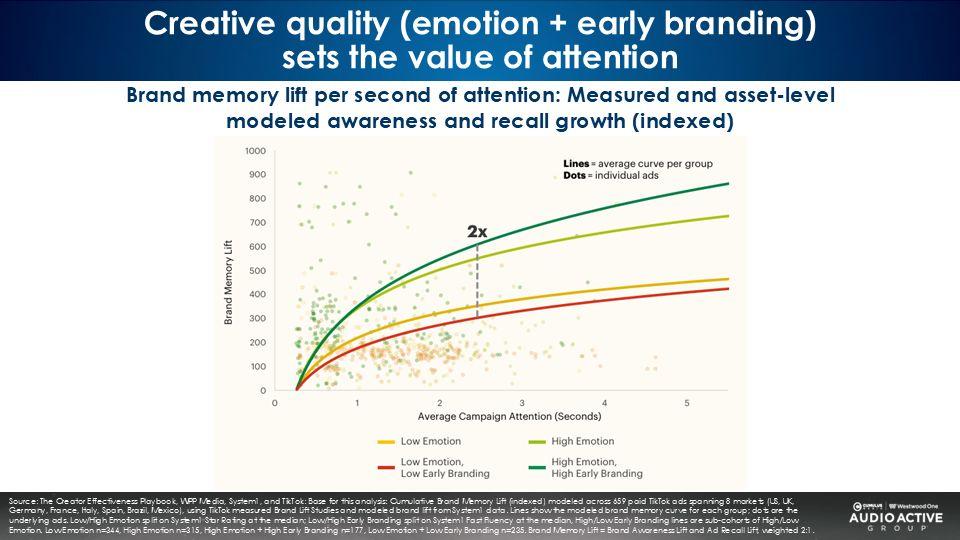
The likelihood that consumers will remember your brand during a host read surges if your brand is mentioned in the first two seconds. The second major best practice is if the ad is entertaining and generates positive emotion, impact is multiplied.
WPP Media and System1 found entertainment earns emotion and early branding gives the brand credit.
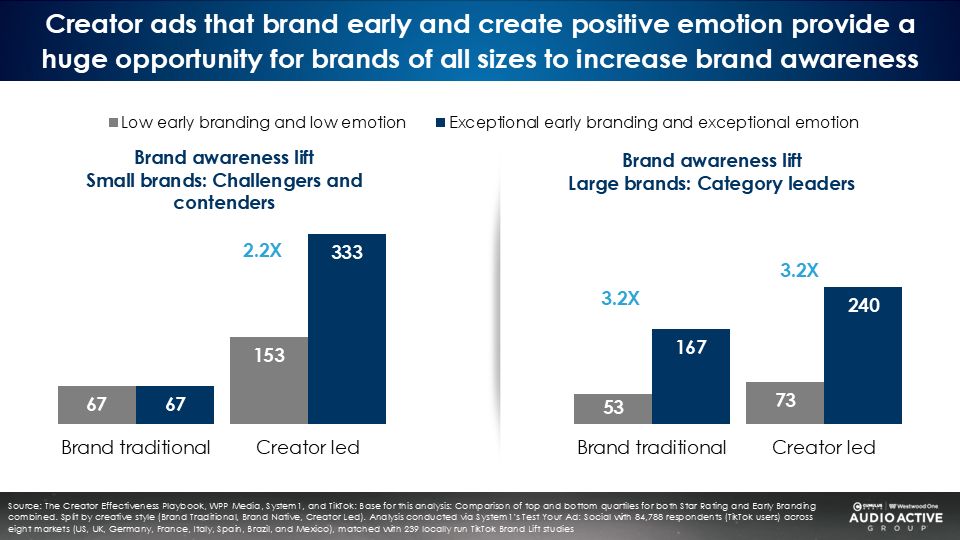
The combination of early branding and strong positive emotion generates much higher brand awareness lift for both small brands (challengers and contenders) as well as large brand category leaders.
Creator-led ads are exceptionally strong at building brand awareness lift for smaller brands. There are hundreds of small brands who have built strong businesses using talent reads on podcasts and AM/FM radio.
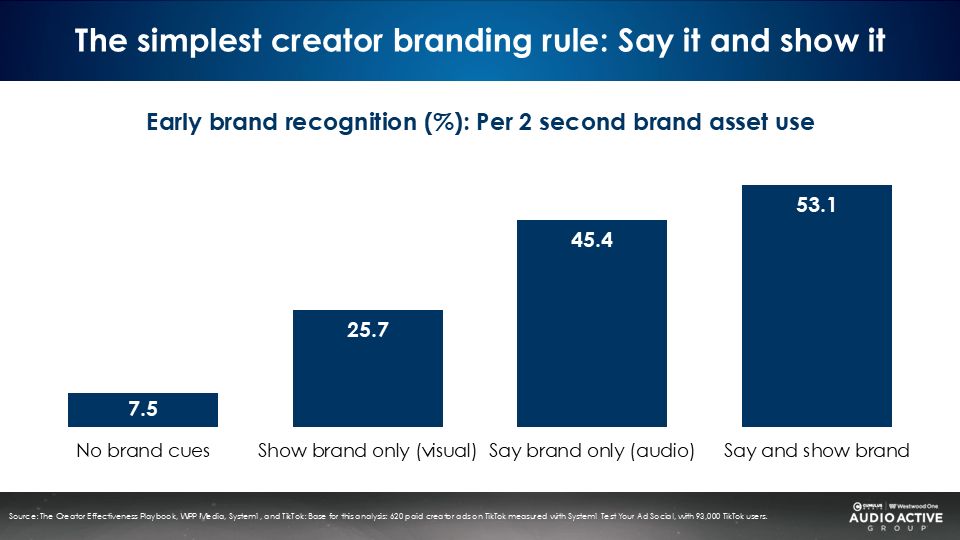
“Say it and show it”: Saying the brand and showing it in the first two seconds of the ad drives the strongest brand recognition
As many podcasts are both seen and heard these days, System1 recommends both showing the brand and saying the brand name in the first two seconds. Versus no brand cues in the first two seconds, the “say it, show it” approach drives 7 times greater brand recognition.
Within a few seconds, early branding and positive emotion drives significantly stronger brand effect compared to ads with poor early branding, weak entertainment, and low levels of positive emotion
Podcast listeners prefer funny and entertaining ads but say they are more likely to hear rational (dull) podcast ads that communicate features/benefits
Over the last five years, a series of studies conducted by Signal Hill Insights and the Cumulus Podcast Network find funny and entertaining ads are preferred among podcast consumers. However, listeners most often hear dull, rational “feature and benefits” ads.
Beware the extraordinary cost of dull: Boring ads require 2X to 2.6X greater media spend to achieve same impact as interesting ads
Boring ads cost a fortune.
System1, Adam Morgan, founder of ad agency eatbigfish, Jon Evans, host of Uncensored CMO, and Peter Field, the legendary “godfather of marketing effectiveness,” released a major study analyzing IPA (The Institute for Practitioners in Advertising) data that revealed brands must spend significantly more media money on dull ads compared to interesting, non-dull ads.
Sourced from the IPA Effectiveness Databank of thousands of marketing effectiveness case studies, Peter Field found that dull ads don’t work very hard.
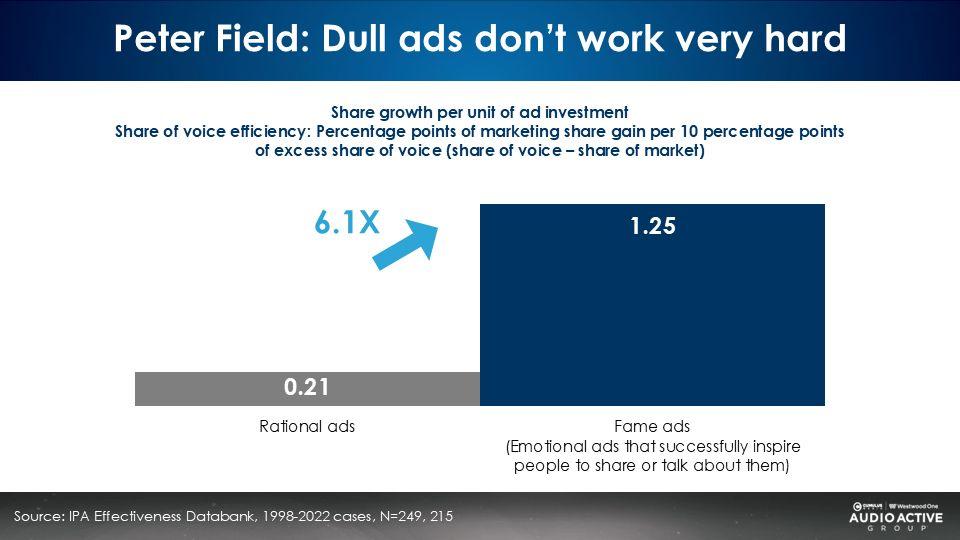
Interesting ads, a.k.a. fame ads, generate 6.1X more share growth than dull, rational ads. Peter Field reports:
- Advertisers must spend 2.6X more on dull ads than on interesting ads to achieve the same very large market share growth.
- Advertisers must spend 2X more on dull ads than on interesting ads to generate very large profit growth.
- Advertisers must spend 2.6X more on dull ads than on interesting ads to have large business effects.
The most successful ads use both salesmanship and showmanship
System1, the creative testing leader, offers the following right-brained audio creative elements that enhance positive consumer emotions. The left-brained audio elements are commonly found in dull host reads which generate little positive emotion.
Good advertising tells a story in an entertaining and emotional way
Advertising legend David Ogilvy said, “You can’t bore people into buying your product. You can only interest them in buying it. If you’re selling fire extinguishers, you’d better start with the fire.”
In Paul Feldwick’s book Why Does The Pedlar Sing? What Creativity Really Means In Advertising, he says, “Advertising is at least as much showmanship as it is salesmanship [and it] builds brands best when it is entertaining, popular and memorable, when it is not just a pitch, but a performance.” The audio audience is pleading for a greater focus on advertising creativity and showmanship.
Humorous ads work: The funniest ads drive 5X more market share growth than the least funny ads
English author G.K. Chesterton famously said, “Humor gets under the door while seriousness is still fumbling at the handle.” System1 organized creative testing of the most serious ads to the funniest ads and examined emotion-based star rating as well as a future share growth.
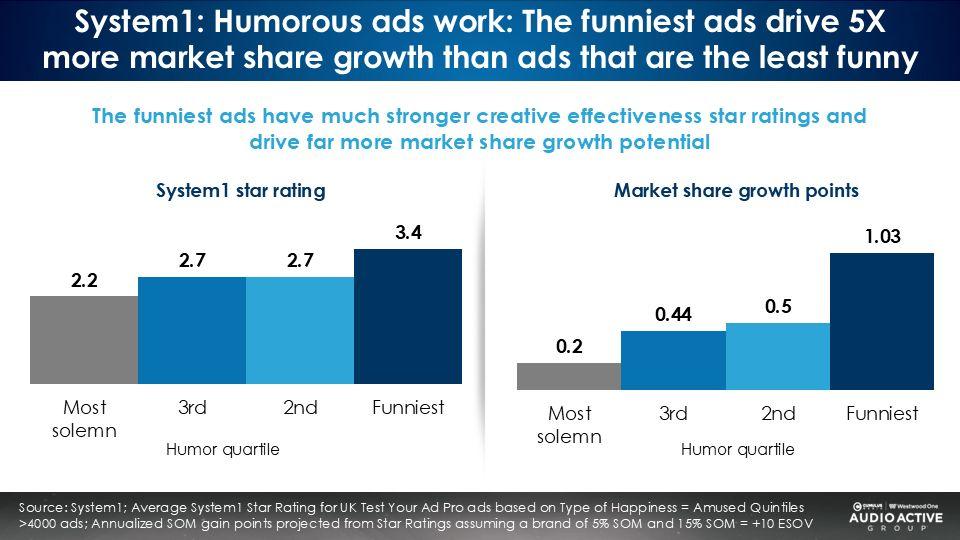
System1 found the funniest ads generate a much stronger 3.4 average star rating compared to only a 2.2 for the most serious and solemn ads.
The greater the humor, the greater the long-term market share growth. The funniest ads drive 5X more market share growth than ads that are the least funny.
The most boring ads generate only 0.2 points of long-term share growth. The funniest ads generate 1.03 points of long-term share increases, a 5X advantage.
System1 reports the greater the emotion, the greater the brand memory. System1 evaluates ads on a one-to-five-star system. One-star ads are dull with very low emotion. Four- and five-star ads generate strong emotion and brand memory through surprise, happiness, and humor.
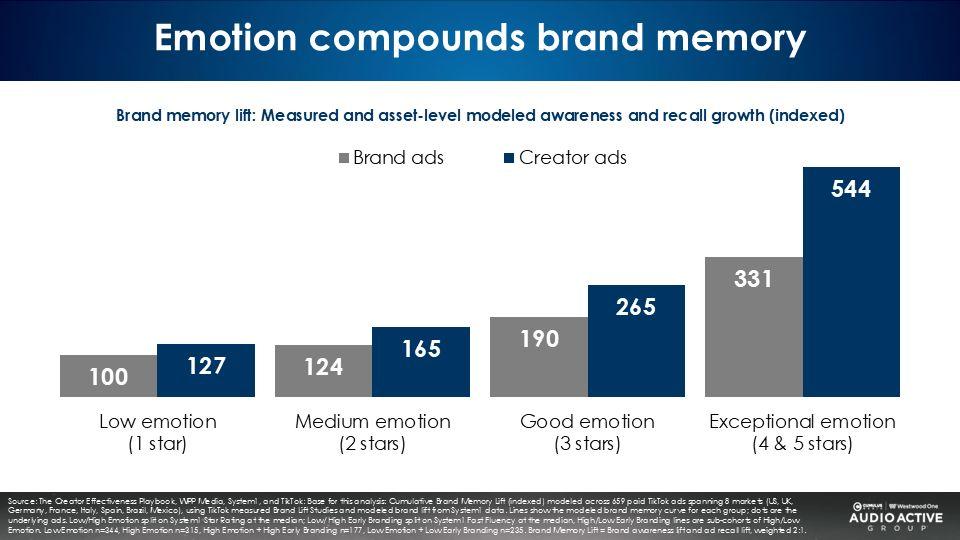
Emotion-based creative builds stronger brands and generates greater business outcomes
The godfathers of marketing effectiveness, Les Binet and Peter Field, have studied thousands of campaigns and found that emotion-based advertising generates stronger brand equity compared to rational creative.
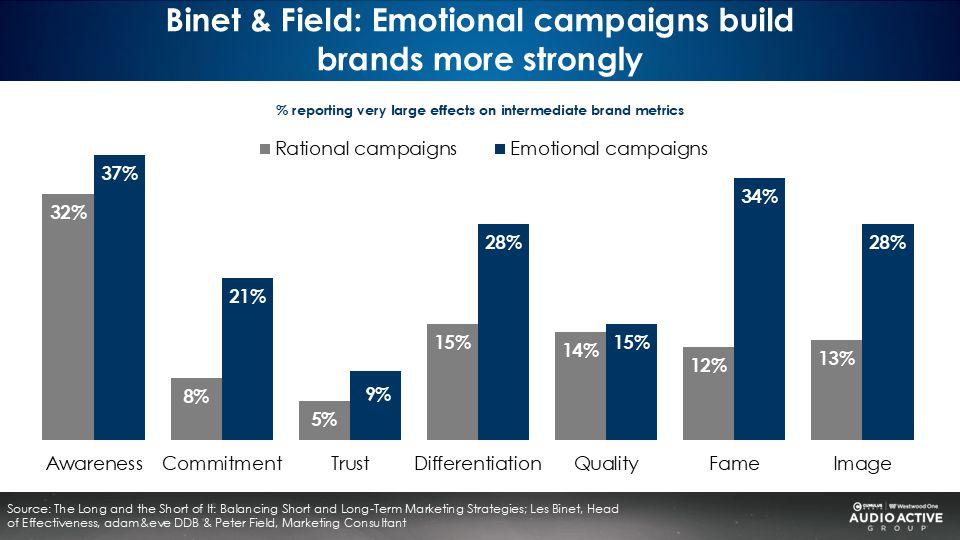
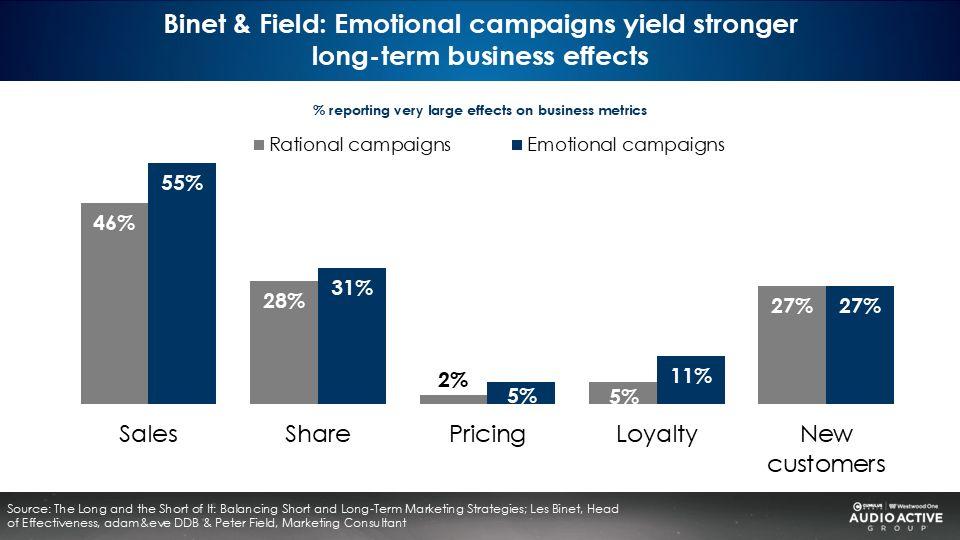
Binet and Field’s research finds that this stronger brand equity leads to better business outcomes.
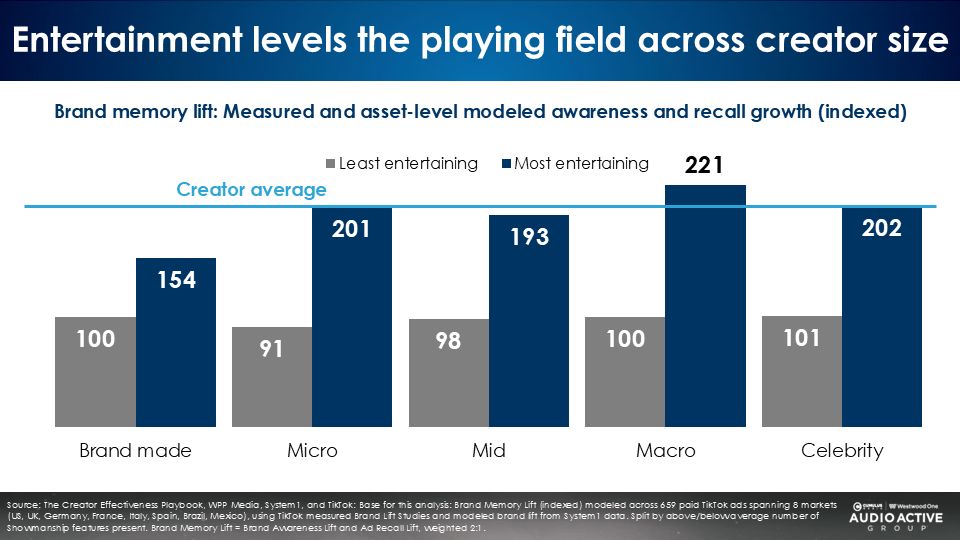
Funny and entertaining ads create consistently generate strong brand memory regardless of the size of the host audience
WPP Media and System1 classified creators by follower count:
- Micro: 10,000 to 100,000
- Mid: 101,000 to 300,000
- Macro: 301,000 to 1,000,000
- Celebrity: Over 1,000,000
Across the four creator audience sizes, ads that are the most entertaining drive exceptional levels of brand memory. The moral of the story, regardless of the size of the podcast or AM/FM radio audience, is ensuring your host-read ads are funny and entertaining is the key to driving your brand fame.
Key findings:
- Host-read ads generate greater impact: System1 and WPP Media find creator ads (a.k.a. “host reads”) drive greater brand memory lift, which is the combination of brand awareness and ad recall.
- Two best practices: Say the name of the advertiser within the first two seconds and ensure strong positive emotion via entertainment.
- “Say it and show it”: Saying the brand and showing it in the first two seconds of the ad drives the strongest brand recognition.
- Conduct a “brand early and often” creative audit: Watch/listen to all your ads. Check off if your brand is mentioned in the first two seconds and if there are at least five or more audio track brand mentions in 30-second ads.
- Use both salesmanship and showmanship: Emotion-based creative that is funny and entertaining builds stronger brands and generates greater business outcomes.
- Utilize right brain elements such as characters with vitality, story unfolding, clear sense of place, sounds of the living, dialogue, word play, distinctive accents, and music with discernable melody.
Click here to view a 17-minute video of the key findings.
Pierre Bouvard is Chief Insights Officer of the Cumulus Media | Westwood One Audio Active Group®.
Contact the Insights team at CorpMarketing@westwoodone.com.